Activate Your Human Edge: Leading Brain-Friendly Change in the Age of AI
BY Kristen Kwiatkowski
|
June 04, 2026

Recently, a student showed Dossier Harps her resume, saying it was completed using AI. Harps was impressed by the overall inclusions in the resume but noted one serious mistake. In the summary section, the student was said to have 20 years of experience. The problem? The student was only 20 years old.
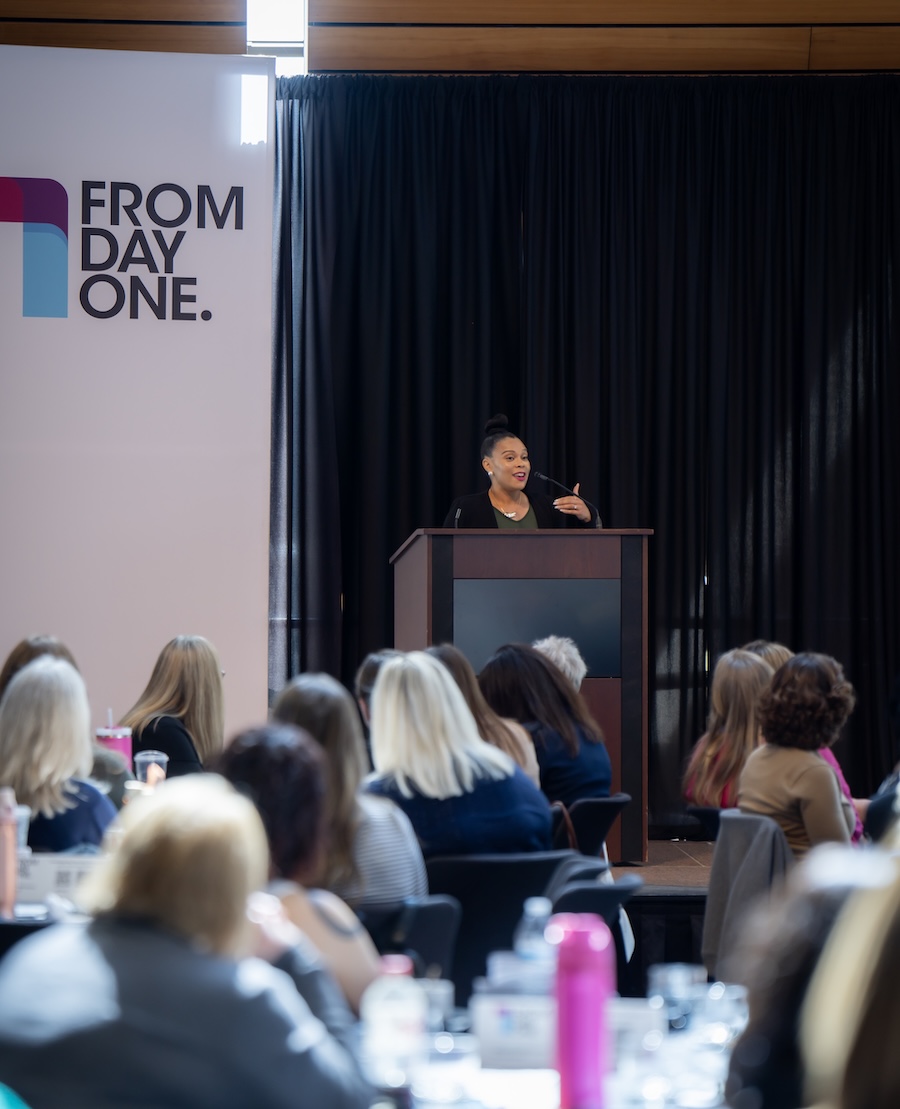
During a thought leadership spotlight at From Day One’s Minneapolis conference, Harps, facilitation manager at LifeLabs Learning, illustrated this story as an example as to how AI needs oversight and guidance for a variety of tasks. “Moments like this remind us that, while AI is powerful, humans still need discernment,” said Harps. “Humans still need judgment, humans still need coaching, and humans still need each other.”
Harps also described a recent experience where she was in a pharmacy and customers waiting in a long line started to express discontent with the employees handling the checkout procedure. This made her think of incivility in the workplace, which has increased since 2020. This may be due to many individuals experiencing more stress, uncertainty, and emotional exhaustion which in turn can lead to empathy and patience eroding, says Harps. “So, when people ask me in my work, am I scared of AI, my answer is no,” said Harps. “I am not nervous about AI, I am nervous about incivility.”
However, AI can cause discomfort and uncertainty for many individuals. For example, employees who have been doing their job for years without the help of AI and ultimately have to start using AI may feel discomfort and be unsure as to the direction they’re headed. “It could feel really scary, because when the way that we work changes, our sense of confidence, control, and our competence can get disrupted,” she said.
Harps discussed a concept offered by Robert Katz, a leadership researcher, which is a three skills approach to effective leadership which includes technical skills, human skills, and conceptual skills. Technical skills are what you know how to do, human skills are how you work with people, and conceptual skills are how you think strategically.
Many organizations are focusing on technical AI skills, which are important, however, there needs to be more focus on human skills and conceptual skills and how they pertain to AI, she says.
“We have to have the human skills, such as communicating influentially, understanding how different people learn and process, giving feedback, having courageous conversations when you notice emotional stress or incivility in your teams, building psychological safety and coaching people through uncertainty,” said Harps.
“And conceptual skills are about seeing the bigger picture, like pattern recognition, systems thinking, and change implementation,” she continued.
As with the seven stages of grief, an adaptation of Elisabeth Kübler-Ross’s five stages of grief, this concept can also apply in similar form to workplace change. Not everyone will be within the same stage and individuals in the workplace may be in different generations, have different ways of learning, and different experiences with technology.
Trust is also a major component for organizations to consider. “Companies forget to acknowledge the emotions that build or break trust,” said Harps. “The major tenants of trust are credibility, reliability, and psychological safety and trust becomes especially important during times of uncertainty and change.”
The first component of trust is credibility, and individuals want to know if the leader is competent to lead them through change. Next is reliability and can you depend on that person. In addition, psychological safety is also important with trust and individuals want to be able to ask questions and be honest with the leaders in their organizations.
“So, once we understand the emotional side of change and the importance of trust, the next question is how do leaders practice this in real life?” said Harps.
Being a great leader isn’t just about being a good person and that’s all. A great leader has to be intentional, deliberate, and exhibit mindful behaviors and actions. “Great leadership happens on purpose,” she said.
Harps describes a model they teach at LifeLabs Learning called CAMPS, which is based on the concept that the brain constantly scans for threats or rewards. Under the CAMPS model, the features include certainty, autonomy, meaning, progress, and social inclusion. “What I love about this framework is that it reminds us that understanding and addressing the human experience is the greatest differentiator in the age of AI,” said Harps.
As individuals navigate AI and uncover how this technology will evolve in the years that follow, keeping one factor in mind along the way is essential. “I do believe that the most underrated leadership skill in the age of AI is the ability to inspire hope.”
“People are searching for something deeply human to hold on to, which is truth and hope,” continued Harps. “The truth is things are changing, and things will continue to change, and we have to evolve and change with the times to be prepared for the future of work, but hope says we can learn, we can adapt, we can grow, we can move forward, and that is the real human edge in the age of AI. It’s not just mastering the new technology, but leading people through uncertainty and confusion with compassion, trust, and hope.”
Editor’s note: From Day One thanks our partner, LifeLabs Learning, for sponsoring this thought leadership spotlight.
Kristen Kwiatkowski is a professional freelance writer covering a wide array of industries, with a focus on food and beverage and business. Her work has been featured in the Bucks County Herald, Eater Philly, Edible Lehigh Valley, Cider Culture, and The Town Dish.
(Photos by Josh Larson for From Day One)