Aligning HR and Finance for Better Decisions and Stronger Outcomes
BY Emily McCrary-Ruiz-Esparza
|
May 12, 2026

Human resources and finance teams tend to diverge when it comes to two things, says Ken Matos, director of market insights at HR software platform HiBob. That’s decision-making and data.
When there is a decision to be made about workforce planning, does HR go to finance for permission or a check? And how are those decisions made? HR and finance often have different data, sometimes to describe the same thing, so when they look at the same problem from different angles and don’t agree, they start questioning each other, sometimes suspiciously.
Where does this disagreement show up in the organization? “All the way down at the manager level,” Matos said. And it can be disastrous. In a 2026 survey, HiBob asked managers for examples of what happens when missing or conflicting data damages the people decision process, “and we saw some scary things,” he said, like people being put in the wrong pay grade, missing necessary pay raises, or two candidates hired for the same job—and showing up on the same day.
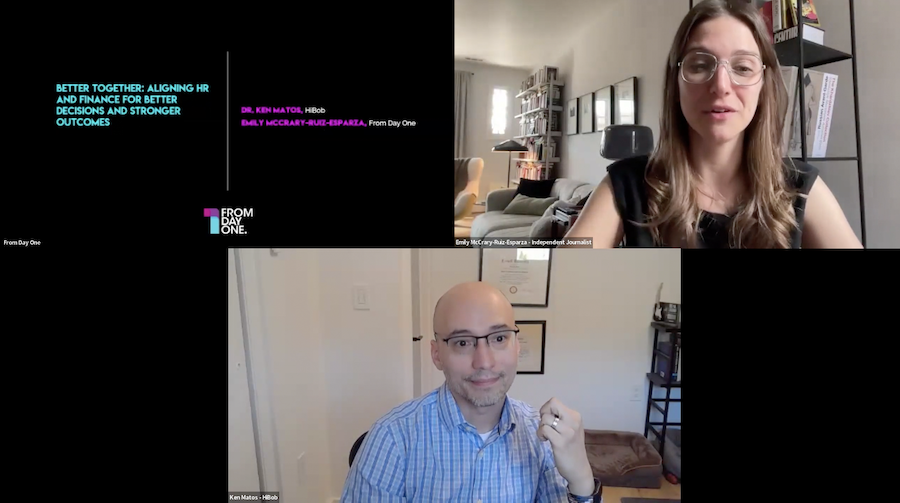
During a From Day One webinar on how HR and finance can align for better decisions and stronger outcomes, Matos described in detail where HR and finance often disagree, and how HR leaders can change the story.
The misalignment is a time-waster. Almost half (46%) of managers told HiBob they spend three to four hours stitching together data before making decisions, and 62% of managers simply make educated guesses to avoid missing deadlines. The results? Three in four managers say their talent decisions have been challenged in some way in the last year.
These are managers making frequent decisions about promotions, pay raises, bonuses, and access to skills training. As Matos put it: “all the things that cost money in your organization.”
“That’s where you’re really bleeding money and bleeding engagement,” he said. “When you’re wondering, why is there frustration and burnout for managers? Well, if they spend all this time trying to put together the right info, and they’re struggling to do that, they’re going to end up getting challenged. That sounds like the perfect recipe for burnout.”
But if HR and finance can recognize that they’re trying to solve the same problem, and achieve the same goal, it “allows you to have a much more rich conversation,” Matos said. He gave some advice on how HR can make better appeals to the finance team: Show them money made, money saved, and risk resolved.
And in terms of lead time, the more the better. It can take a quarter or two to gather data and make a plan, he said, but if you involve stakeholders early, you’ll earn social capital. “If you’re building it with them, they’ll be like, ‘of course, it took you that long because I needed to get this information, and I didn’t have time to give it to you, but I’m behind it, so let’s make this happen.’”
Editor’s note: From Day One thanks our partner, HiBob, for sponsoring this webinar.
Emily McCrary-Ruiz-Esparza is an independent journalist and From Day One contributing editor who writes about business and the world of work. Her work has appeared in the Economist, the BBC, The Washington Post, Inc., and Business Insider, among others. She is the recipient of a Virginia Press Association award for business and financial journalism. She is the host of How to Be Anything, the podcast about people with unusual jobs.
(Photo by Jacob Wackerhausen/iStock)