How People Analytics Can Give HR Leaders a Window Into Employee Experience
BY Katie Chambers
|
December 22, 2025

Most HR leaders agree that employee engagement is central to a healthy workplace. But is it necessary to constantly measure it? “The reason we’re asking about engagement isn’t because it looks good on a scorecard,” said Michelle Seidel, Human Capital Client Leader, Aon, in a panel conversation at From Day One’s recent Los Angeles conference. “It’s because engagement is linked to productivity. It’s linked to customer service. It’s linked to employee attrition, attraction, and retention.”
While people analytics is sometimes viewed as esoteric or intrusive, the evolving field offers HR professionals new tools to understand worker sentiment, values, and skills. It can be used to spot trends in worker retention, predict candidate success, understand employee engagement, optimize benefits, or discover patterns in employee health and well-being. But what are the guardrails that need to be set up to safeguard trust, privacy, and corporate values? The panel explored how, when used thoughtfully, people analytics can help forecast larger future-of-work trends and employee expectations.
The Benefit of Real-Time Analytics
The old employee-survey model is no longer effective, says Andrew Dufresne, head of HR Operations and Employee Experience, North America, UST, a global transformation company specializing in AI-powered tech and engineering. By the time HR can finish analyzing a traditional annual survey, the data is already many months old. “We’ve moved towards more pulse surveys and real-time engagement,” he said, citing an internal company platform that can track feedback on all aspects of the employee experience, such as hiring, retiring, or getting a promotion. “We’re collecting that feedback as those processes are happening.” His organization also partners with outside companies like Great Place to Work and Top Employers Institute for further benchmarking.
Surveys don’t have to be complex. “I know of organizations who are using really simple emoji surveys, where you just click the happy face or the sad face [and] you have immediate feedback. You can respond to it in hours or days, versus the 90 days that’s typical from a traditional survey,” Seidel said. She says sentiment scraping, such as using AI to grab data from review sites like Glassdoor, can also help identify gaps and strengths.
It’s important to be specific with your intentions as you craft survey questions. “A huge component is ensuring that these surveys are designed strategically, so that we’re getting the information that we really want, which is how engaged is somebody versus how satisfied [they] are,” said Brian Padilla, SVP, HR business partner, for Lionsgate. “[Our surveys are] designed to assess engagement, and then to also point to the reasons why someone might not be engaged. Maybe they don’t have a clear understanding of how their role fits into the bigger picture, or they don’t feel supported by their manager.”
Intention—and clear communication—can also help keep HR from overstepping in their data collection and becoming too invasive. “How do you get somebody to want to give you information? We’re asking for things like self-identification surveys and things where we’re required to report on it, but people don’t necessarily trust that that information is going to be used in a way that’s ethical,” Padilla said. He suggests “having those conversations with people [and] showing them how the process works, what the end product looks like, and what actually goes out into the world.”
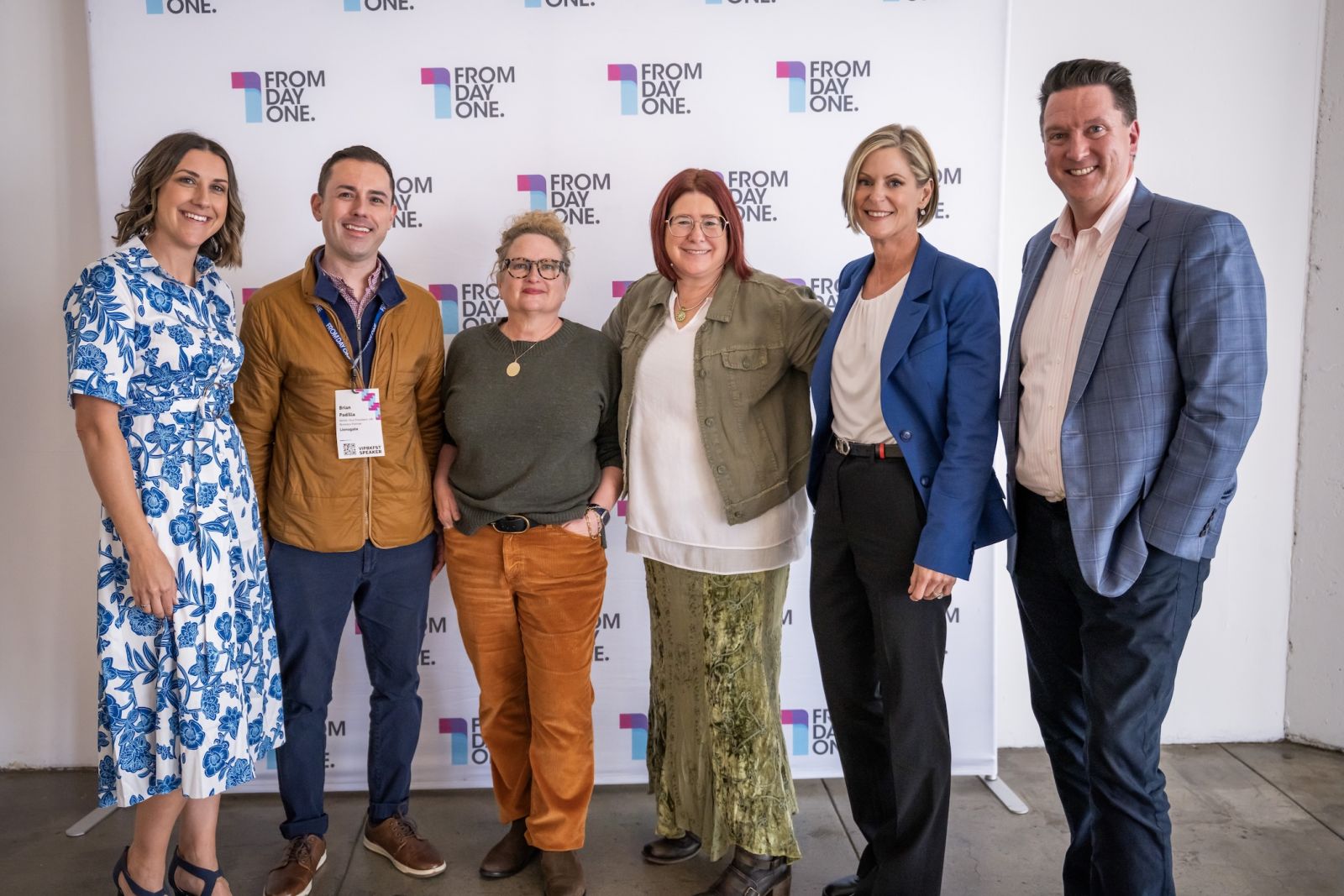
Rachyll Tenny, chief talent officer for people strategy and organizational impact for Capstone Partners, and investment-banking firm, summed it up: “Trust, transparency, and context.” With considerate framing, organizations can build a culture of trust. Padilla shared that a recent Lionsgate self-identification survey with sensitive questions regarding sexual orientation and parental status had a 90% response rate because it was communicated with intention and care.
Building a Pathway Forward
“Data [can] be used to be both prescriptive and predictive,” said moderator Stacy Perman, Staff Writer, the Los Angeles Times, both identifying gaps and providing proposed solutions. Added Seidel: “When we look at the survey results in the data, it tells us what’s going on, why it might be happening, what we can do to fix it. Sometimes it even tells us how to prioritize those issues and when we need to fix it by.” Traditional data-collection modes are too fragmented; AI can pull everything together and generate a nuanced plan.
AI can be deployed to dive deeper into the data on hand, which is especially important as the working world generally transitions from a role-based to a skill-based model. “[AI] can look at skill gaps before they become performance gaps, because that’s really when it hits you hardest,” said Rebecca Warren, talent-centered transformation leader for Eightfold, an AI-powered talent-intelligence platform. Analyzing skills in this way can also help with talent acquisition and retention. Warren noted that she started at the company in talent acquisition, then moved to customer success, then marketing and talent transformation—all because she was invited to apply based on her skillset. “Tying hiring, development, and skill gaps to what the business is trying to achieve makes all the difference, instead of trying to plug gaps in a in a leaky bucket,” she said.
And of course, AI comes with its own ethical concerns, leading again to that need for transparency, communication, and compliance. “What we talk about inside of Eightfold is, ‘We are responsible and explainable AI,’ so everything that we do is tracked, and we can go back and say, ‘This is what happened.’ So if there is something that wasn’t handled correctly, we can go back and look at it more quickly than if we had a manual process or if we weren’t tracking all of those things,” Warren said. The organization also utilizes an ethics council.
Going forward, organizations can rely on AI-powered people analytics to solve some of their toughest conundrums. Seidel said, “If I could use data and analytics to achieve one key thing, it would be to answer the question more effectively and with more precision: ‘Where is the best place for our organization to invest the next dollar in our workforce for the greatest return on investment?’”
Katie Chambers is a freelance writer and award-winning communications executive with a lifelong commitment to supporting artists and advocating for inclusion. Her work has been seen in HuffPost, Top Think, and several printed essay collections, and she has appeared on Cheddar News, iWomanTV, On New Jersey, and CBS New York.
(Photos by Josh Larson for From Day One)


