What Makes a Company Totally Rewarding to Work For
BY Kristen Kwiatkowski
|
March 23, 2026

The role of chief heart officer may not be a job title you come across in business every day. While rare in name, it’s powerful in impact, keeping employees connected and turning a company into a place worth showing up for.
Claude Silver, chief heart officer at VaynerX and author of Be Yourself at Work, spoke about her book and how she’s helping employees show up as themselves at work during a fireside chat at From Day One’s NYC benefits conference.
When the CEO of VaynerMedia asked Silver to be the chief heart officer at VaynerX, she had three questions about the job position, including what her role would be in an HR department setting, what they are building there, and how to know if she’s successful.
As for what they’re building at VaynerX, “He said, we’re building the single greatest human organization in the history of time,” said Silver. And when it comes to knowing when she’s successful, CEO Gary Vaynerchuk told her that she would impact every single human being while deploying empathy throughout the offices.
“Deploying empathy is pretty ambiguous, and it’s pretty massive,” said Silver. “It depends on what empathy means in every given moment, because it’s going to mean something different to you and to you, and so being able to discern that without a lot of subjectivity or bias, is really the job,” she told session moderator Steve Koepp, From Day One’s editor in chief.
“It’s also creating and holding space for people, no matter where they are on their journey, with the hopes that we’ll get everyone from here to high performing to here to thriving, whether or not that’s in our four walls,” said Silver.
When it was time to draft a job description, Silver included the usual important components such as empathy, elaboration, imagination, and creativity, but also added in other key components including trust, psychological safety, and belonging but concentrating on factors such as talent, talent retention, and performance.
“Everything in this job description is still housed in empathy, psychological safety, all of those things that are just natural to me and natural to many of us, but it’s really geared on finding the needle in the haystack and making sure that we are retaining those needles in haystacks,” she said.
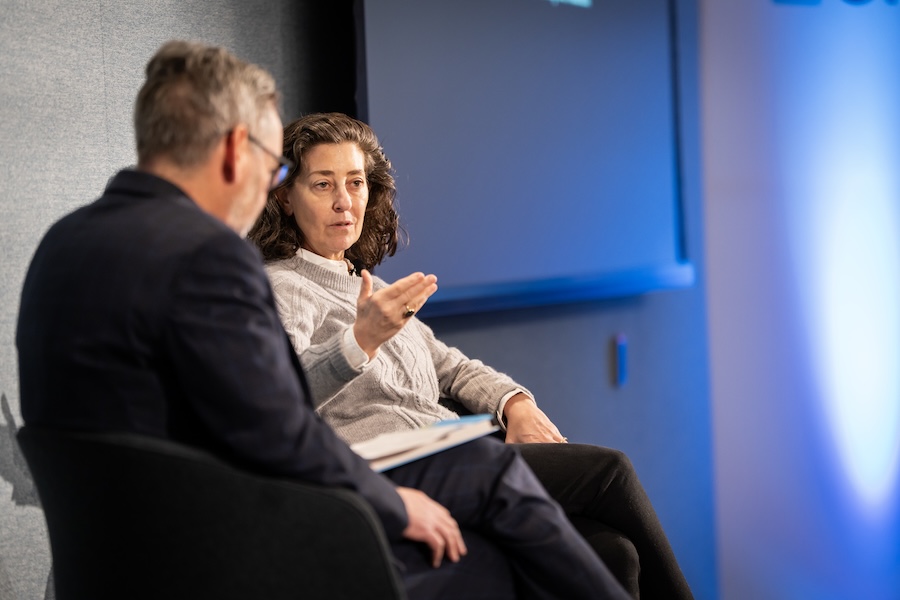
When asked about the philosophy of her book, Silver shared that it’s a call to individuals to know who they are and what they offer. “What I’m saying is find yourself. You are in charge of yourself. You’re the CEO of yourself, and so through your own self-awareness journey, whether or not that starts today, yesterday, or on your last day on earth, begin that journey so that you can get to know yourself and know what your triggers are and where your limits are,” said Silver.
“The premise of the book is you deserve to be comfortable with yourself and to share yourself in any environment that you’re in,” said Silver. “I think we’ve been conditioned to think that others can change our behavior, but no one can change your behavior other than you, and so that’s really what it's all about.”
“I don’t subscribe to bringing your whole self to work, I really don't,” said Silver. “You figure out what part you want to bring, and hopefully it’s a part that you enjoy and that others might get a kick out of.”
How Leaders Can Help
When asked about how team leaders can meet the employees’ needs, Silver discussed Maslow’s hierarchy of needs in connection with what HR professionals should keep in mind with their teams. It’s important to individuals that they have their needs met, including the physiological needs, psychological needs, and eventually self-actualization.
When putting this into effect in the workplace, it’s important to look at how team leaders can help their employees and how employees can respond to this assistance. Also, how can people in a work environment be their whole selves yet have boundaries and how can the team leaders best work with these individuals?
“I think the key there is the culture and the leaders and managers—how can they become more human? How can they be more empathetic, caring, and compassionate?” When managers and leaders show their human qualities, they can reach their team and show them they’re supported, she says.
Supporting Growth
Most employees want to grow and evolve in their job roles and with the overall company they work for. So, how can team leaders make this possible?
Silver highlighted that at her company they often use a simple phrase, “Yes and…” This could mean ‘yes, that’s a possibility’ or ‘yes, we’ve looked at something and know we can provide certain things for our employees.’ A growth mindset really means being open to possibility. One solution won’t work for all employees, but you also can’t do something specific for each individual employee. It has to be something in the middle that works.
“We’re not going to be able to retain our folks, our great people, and especially this younger generation, [if we’re leading with a] ‘no.’ So, let’s see what's possible. We can’t promise, but let’s see what’s possible.”
Kristen Kwiatkowski is a professional freelance writer covering a wide array of industries, with a focus on food and beverage and business. Her work has been featured in the Bucks County Herald, Eater Philly, Edible Lehigh Valley, Cider Culture, and The Town Dish.
(Photos by Josh Larson for From Day One)