How HR Can Be a Strategic Partner in a Culture of Compassion and Accountability
BY Kristen Kwiatkowski
|
February 13, 2026

In any business, it’s not only important to attract future employees, but to retain them for years to come. To do so, it takes many pieces of the puzzle to come together and make this goal a reality.
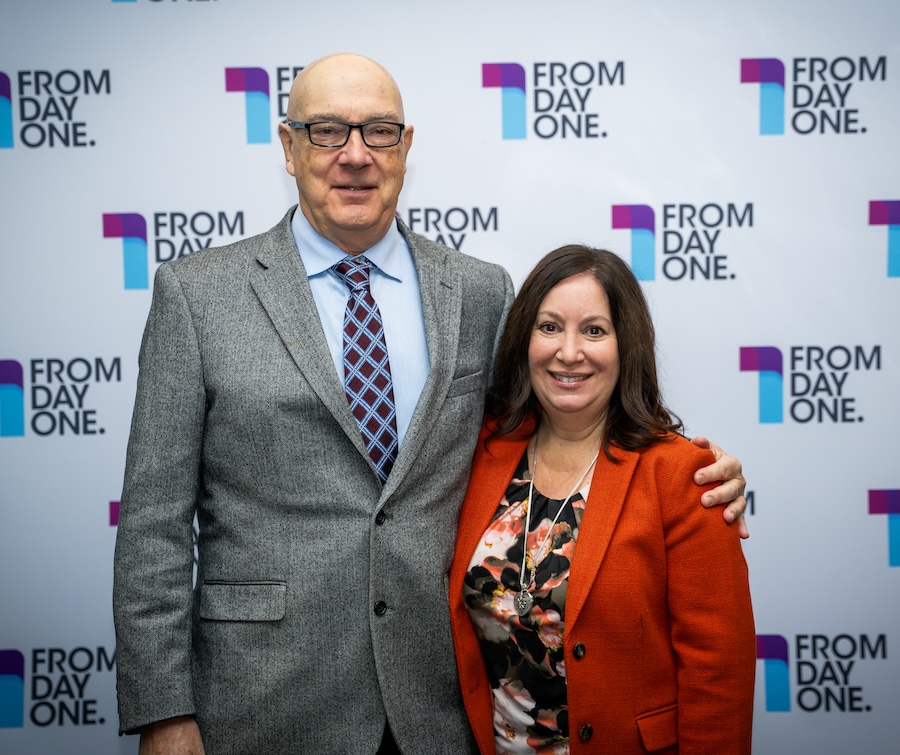
Alison Smith, chief HR officer at Piedmont Healthcare, spoke about this with moderator Andy Miller, founder and editor of Georgia Health News, during a fireside chat at From Day One’s Atlanta conference. Smith highlighted various ways that HR teams can help to nurture compassion and accountability, especially in the area of healthcare.
Smith pivoted to the healthcare industry from a previous role at Publix and quickly noticed the contrast between retail grocery and healthcare. In healthcare, the stakes are literally life and death, and she values how patient care makes the work both meaningful and complex, with a clear, lasting impact.
How HR Teams Make Things Happen
When asked about her goals as chief human resources officer, Smith mentioned how important it was to have a seat at the table where things happen. “It’s really important to be at that table, to have a seat at the executive table, and really be able to strategically lead the organization not just at where it is now, but where it’s going,” she said.
It’s important to see what the growth strategy looks like and what human resources can do to encourage this growth, she says.
“The other piece with HR is really making sure that you’ve got the talent, both now and what that succession planning piece is, and are you developing the workforce and keeping the workforce so that you're sustainable for the future in the long term.”
The Importance of Both Hiring and Retention
A shortage of nurses as it pertains to both attracting and retaining these medical professionals is a big challenge in the healthcare industry today, says Smith. “With this shortage it makes it a little bit more challenging to figure out,” she said.
“How are you going to design the workforce and how are you going to design the work to accommodate the fact that there’s just not enough folks to do the work that is needed down the road?” Thus, the focus needs to be on recruiting.
When the company recruits, the focus is on the culture and how their employees are ambassadors of the culture. The organization builds relationships with colleges in the area and Smith states that with her prior company the outreach was also extended to high school students as these 17- and 18-year-olds will soon be graduating and considering future careers. Piedmont is hopeful to start doing this type of outreach as well, she says.
A crucial part of retaining employees is knowing how they feel. One way to do so is through surveys. “We use the Great Place to Work tool, and we’ve really found that to be helpful,” she said. “We do an annual survey once you’re on that, but we actually do a lot of pulse surveys, too.”
Surveys are sent to recently hired employees to understand their hiring and training experience and whether they feel supported. When employees tend to leave around a similar point in time, the HR team analyzes the feedback to identify why and uses those insights to refine recruiting and training.
An employee’s relationship with their supervisor can also have a lot to do with retention, says Smith. Although compensation and benefits are extremely important factors, the appreciation of a supervisor towards their employees goes a long way. A “thank you” goes a long way. If the supervisor is supporting their employees, this can play a part in retention.
“When you think about retention, that’s why people want to stay,” stated Smith. “They’re working for someone that they believe cares about them, that champions them, that’s invested in their growth, and that, in the end, means a lot more than anything else that you can do.”
Getting Company Values Across
Another focal point to help recruit and retain is effective branding, which in this case, can mean showing how the company impacts its community. “Piedmont does a great job of trying to help people understand the community impact that it has,” said Smith. “We're a nonprofit, and so we give back a lot to the communities, and we spend a lot of time on trying to understand community needs.”
Part of the branding success also relates to telling an authentic story. The Piedmont Promise Story is something the nonprofit does to highlight individuals within various departments of the team. During the weekly executive meetings, a different executive is tasked with telling a Promise Story about someone on the Piedmont team from any department and how they play a part in making the nonprofit a successful entity.
Supporting Well-Being
Mental health and well-being are another major focus, especially in healthcare. The company provides tools and resources to support team members and encourages them to seek help when they need it.
“Having an environment where you’re encouraged to be supported is one of the first steps in creating an environment where people do actually go get the help that they need, because we know that it can be difficult,” Smith said.
Compassion and accountability go hand in hand. When employees feel supported, they are more likely to stay with the organization for the long term.
Kristen Kwiatkowski is a professional freelance writer covering a wide array of industries, with a focus on food and beverage and business. Her work has been featured in the Bucks County Herald, Eater Philly, Edible Lehigh Valley, Cider Culture, and The Town Dish.
(Photos by Josh Larson for From Day One)


