When Chatbots Start Showing Ads, Who Wins?
BY Erin Behrens
|
February 18, 2026

Super Bowl viewers accustomed to the usual peppy ads for snacks and car insurance were treated to a new wave of brands competing for attention during last week’s game: dueling AI platforms.
Ads for OpenAI took an earnest tone, promoting the use of its Codex tool for creators with the theme, “You Can Just Build Things.” But its archrival Anthropic, on the other hand, went on the attack, aiming to gain an advantage over a question on every marketer’s mind: when will advertisements start appearing in the answers to our AI prompts? Anthropic’s ads formed a quick response to the announcement of paid ads coming to OpenAI’s ChatGPT. The opening round in the Super Bowl foreshadows an exciting time for marketers, a confusing time for consumers, and a hypercompetitive time for these leaders in AI.
Anthropic’s Super Bowl campaign, touting its Claude platform, offered a calculatedly dystopian glimpse of ads in AI. In the commercial that drew the most attention, the lead asks, “Can I get a six-pack quickly?” His extra-jacked training partner recommends, in a suspiciously lagging monotone, that the kid try “Step Boost Maxx, the insoles that add one vertical inch of height,” leaving the youth confused as the slogan flashes: “Ads are coming to AI. But not to Claude.” Anthropic says it will support Claude through paid subscriptions, among other means.
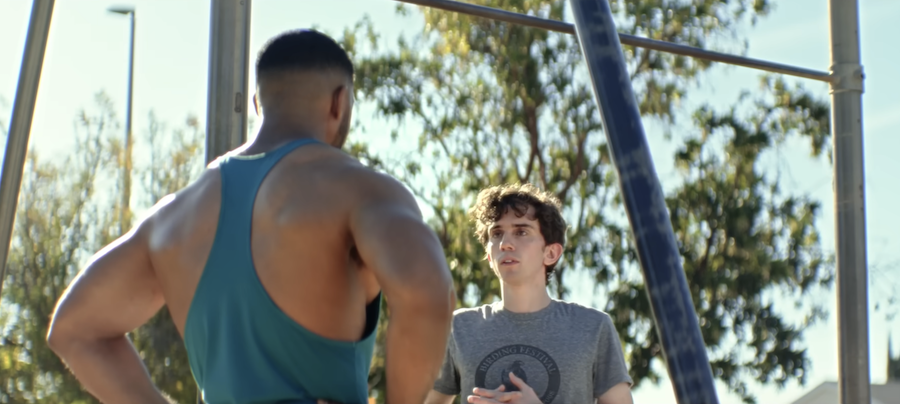
Meanwhile, OpenAI is positioning this change as pragmatic. The company’s CEO, Sam Altman, has framed ads as a way to make the service more accessible. Sponsored placements may be tested for users on the free plan, with clear labeling and a separation from core answers, the company posted. The stated goal is to fund the platform while preserving trust, ensuring users can distinguish between helpful guidance and promotional content.
Rethinking Marketing Strategies
The looming reality of sponsorships on AI platforms is sure to alter marketing strategies. “Sponsorship on AI platforms is right around the corner, especially as these tools mature and look for sustainable revenue models,” Katie Conrad, general manager of customer performance and insights at Delta Air Lines, told From Day One.
“We’re already seeing high-intent behavior shift into AI, from Cyber Monday shopping to full trip planning, which means brands are entering the consideration set earlier than ever,” Conrad said. Instead of scrolling through search results, a consumer might ask a chatbot, “What’s the best 65-inch TV?” or “Which standing desk is worth it?” These high-intent questions could easily and quickly be solved as sponsored content makes its way to chatbots.
If AI becomes the first stop for answers, it also becomes a battleground for brand visibility. Companies will increasingly optimize not just for clicks, but for being the answer, positioning themselves within AI-generated recommendations in ways that feel authentic and helpful to consumers.
Preserving Brand and Integrity
These ads will likely be hyper-targeted, a dynamic that will land in a variety of ways with consumers. Some will appreciate ads that feel genuinely helpful, while others may see that level of precision as invasive. “People will value authentic content that showcases your lived experiences and POV instead of informational content,” said Sooraj Divakaran, marketing director at Firstsource.
Even so, “[marketers] will need to be very thoughtful with how they use this new channel and what they want to achieve from it. The larger question is how the sponsorship will align with what you’re trying to do as a brand,” Divakaran said, citing the case of Anthropic’s recent partnership with the Williams F1 auto-racing team as their official thinking partner. “If what you’re trying to do as a brand is closely aligned with any of these brands, then the partnership will make more sense,” Divakaran said.
When it comes to brand trust, the stakes are high. AI carries a sense of authority while also feeling personal, almost like a one-to-one conversation. That combination is powerful yet fragile. Sponsored suggestions that feel pushy or misleading could backfire quickly, much like in the satirical Super Bowl scenario Anthropic depicted.
“The challenge will be protecting trust, because the power of something like ChatGPT is perceived objectivity, so any sponsored presence has to feel native, transparent, and genuinely useful or it risks eroding the very behavior brands want to tap into,” Conrad of Delta said.
The Chatbot Super Bowl Feud
While OpenAI CEO Sam Altman emphasizes accessibility, Anthropic’s ads clearly made an impact, according to post-game data. “The maker of the Claude chatbot saw visits to its site jump 6.5% following its Super Bowl advertisement that took a swing at rival OpenAI’s decision to bring ads to ChatGPT,” reports CNBC. The ad put Claude into the top 10 free apps on the Apple App Store and drove an 11% increase in daily active users, outperforming competitors like OpenAI, Google Gemini, and Meta.
Was it just an effective ad, or is it tapping into deeper consumer insights? The Super Bowl spot for Claude may have driven clicks and installs, but it also raises a bigger question: how comfortable are users with advertising in this new form of media that takes on the role of a trusted advisor?
Customers are used to seeing pay-per-click (PPC) ads appear in search-engine results, usually posted above the list of non-paid results, but AI chatbots started off with non-commercial personas. As they become the first stop for information, from shopping recommendations to trip-planning, users may start noticing sponsored responses in places they previously expected neutrality. Brands see opportunity, but the presence of ads in AI could shift trust, influence behavior, and even change how people interact with these platforms. The competition has only begun, but Anthropic’s campaign may be signaling the new rules of engagement.
Erin Behrens is an associate editor at From Day One.
(Featured photo by alexsl/iStock)


